Short, rhythmic ambient track with melodic fragments caught in a web of delay and reverb. Available on Bandcamp, exclusively:
Short, rhythmic ambient track with melodic fragments caught in a web of delay and reverb. Available on Bandcamp, exclusively:
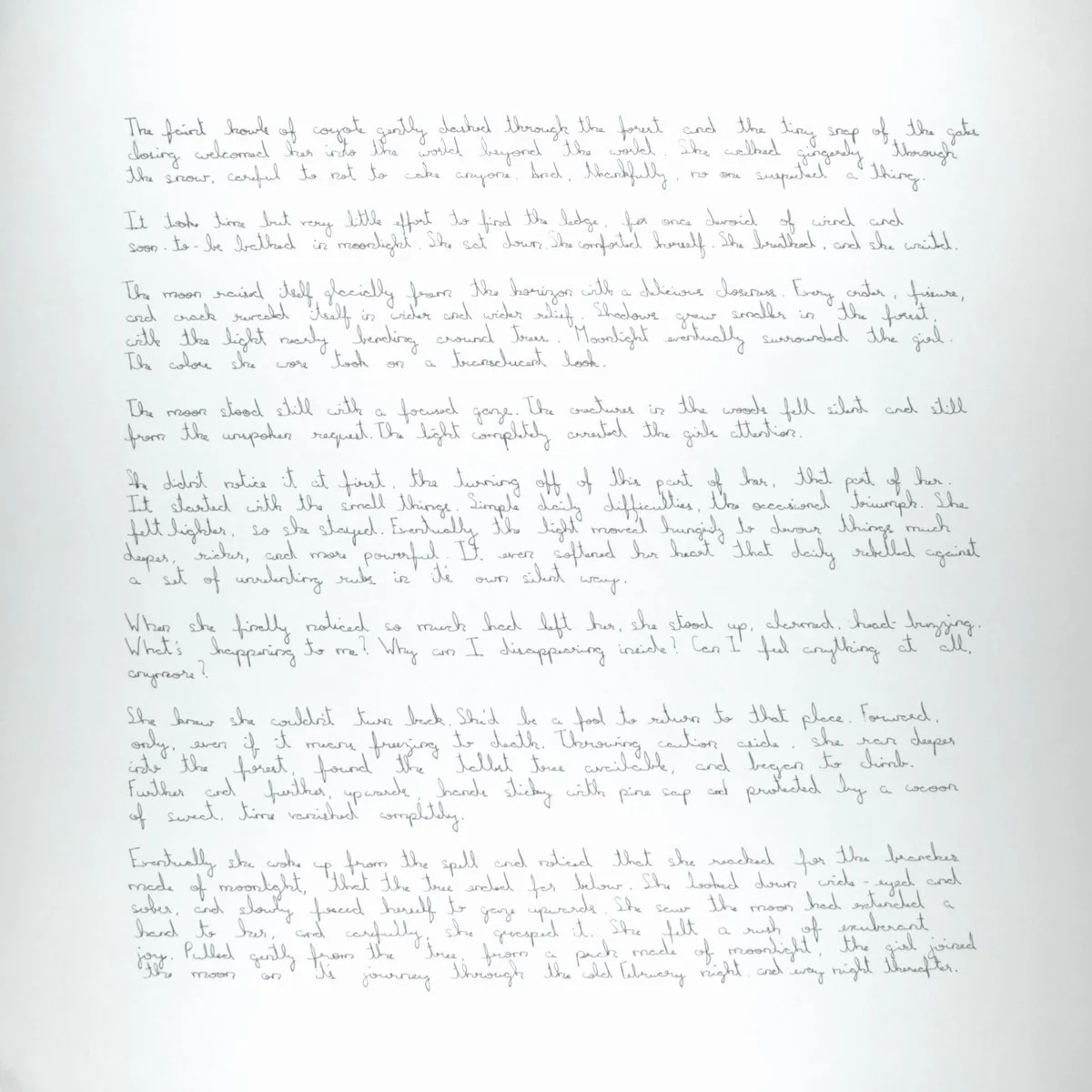
Lunae Lumin will be the latest ambient record to be released by Wicked Cities from a Distance (February 20th). Lunae Lumin is a concept album for the short story, A Perch Made of Moonlight.
This music was recorded and edited to a 432hz standard, which to some ears sounds way better than the perfectly tuned 440hz.
High resolution download of the story, the front and back covers, included with purchase:
Extremely influenced by Tim Hecker, Tomasz Bednarczyk, and Abul Mogard, the newest from Wicked Cities From A Distance focuses deeply upon a moving organ drone expressly synthesized through a Eurorack granular synthesis patch. It’s available for members of Fire, Fire, Red Star Down only.
When the tree branches hold a great deal of weight with ice and snow, when the air seems almost too still for breathing, and when driving anywhere horrifies you, "Music For Ice Storms" is the remedy. This is music that serves you well if you'd just rather... not.
Though Wicked Cities From A Distance's prior two releases have explored the noisier side of ambient with both *Dual Portamento* and *Lodern*, "Music For Ice Storms" marks a return to the more relaxed, chill ambient roots. Always tinged with a slight edge of melancholy, this music is still perfect for a chill snow day.
Névé: A noun meaning granular snow on high mountains that has been compacted into dense, icy formations, related to "nival" conditions in snowy environments.
Gelid: An adjective meaning extremely cold, icy, or frosty, describing temperatures that go beyond "chilly" and penetrate to the bone.
Greatly influenced by both Abul Mogard and Tim Hecker, Dual Portamento is immersive and uncompromising.
The song moves between a difficult calm (really), and a noisy intensity. It starts with ambient drones and soft tremolo textures, letting subtle noises and occasional melodic hints float around. These elements slowly build, creating gradual crescendos that rise from quiet moments to more forceful, cathartic peaks full of noise.
At it's heart, Dual Portamento evolves relentlessly into a bold, undiluted intensity.
From the dark intersections of Austin and Portland, where sound becomes both art and experiment, Evil Gima stands as a bold testament to music’s power to disturb, provoke, and transcend. Founded in 2015 by Dave Wirth, an award-winning film composer known for his cinematic storytelling and membership in The Double Headed Seagulls, Evil Gima was conceived as a creative sanctuary, a space where boundaries were meant to be broken and sound itself could be reinvented. Wirth envisioned a project that would challenge the notion of what “music” should be, favoring emotional honesty and textural complexity over comfort and convention. But Evil Gima truly took form in the early 2020s when Wirth invited longtime collaborator Jorge Martinez, a critically acclaimed musician and artist, to join him in expanding the project’s sonic horizons. The partnership was alchemical, two minds drawn to the same dark gravity of experimentation, working not to please but to provoke. Their creative synergy gave rise to the 2021 release Alluvion, a record that blurred the lines between ambient music and psychological exploration. With Alluvion, they earned a spotlight on Bandcamp’s Daily, where their work was described as “chilling ambient music with mournful tones and barren textures, perfect to score an abandoned cityscape.” The recognition affirmed what Evil Gima had already proven to themselves: that music could be a medium for catharsis, a way to exorcise the restless noise that lives inside the mind.
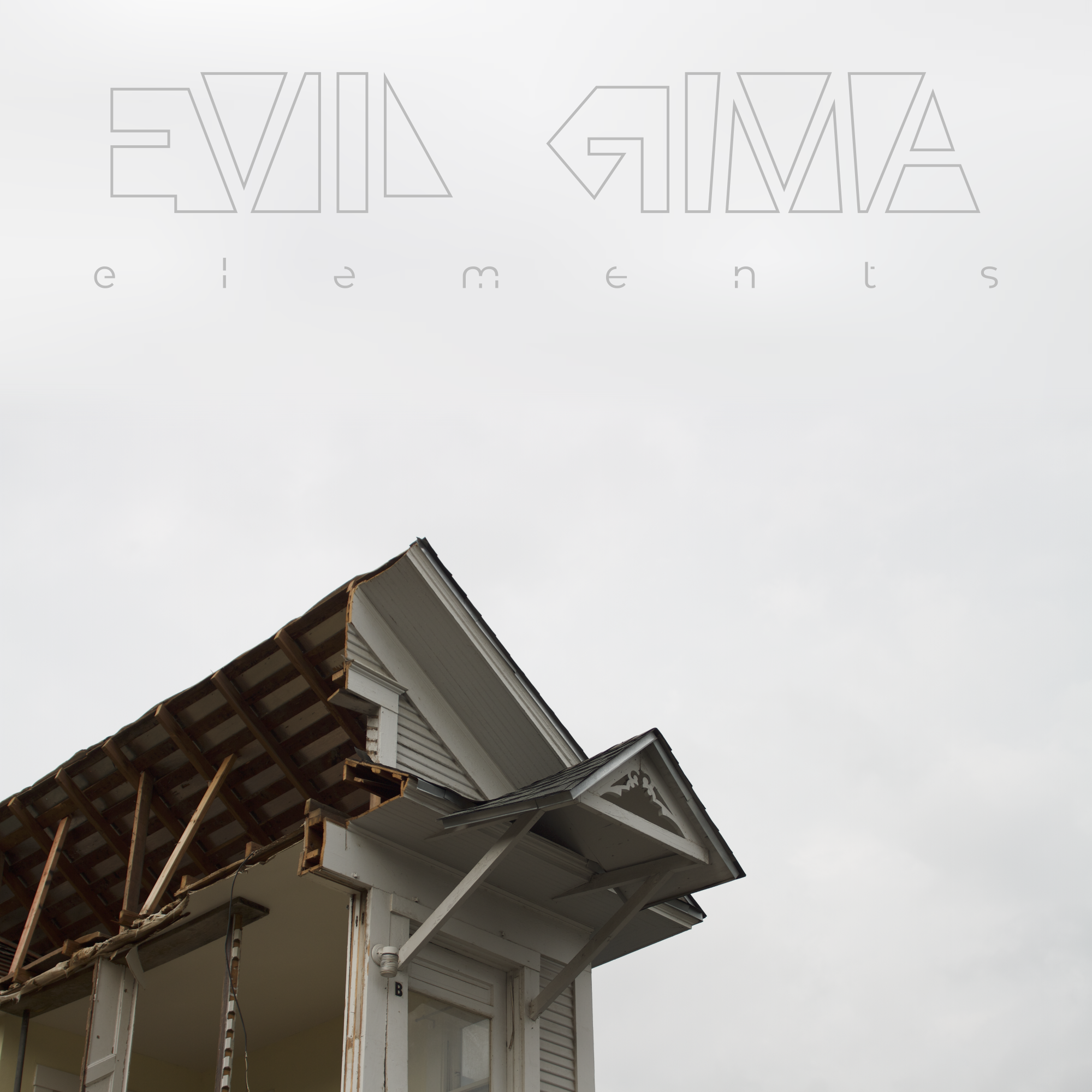
Evil Gima’s sound is not easily categorized. Rooted in ambient, experimental, and avant-garde traditions, their music thrives on imperfection, the hiss of feedback, the grit of distortion, the beauty of what most might call noise. Their compositions explore themes of existentialism, societal dissonance, and emotional entropy, pushing listeners to confront what lies beneath the surface of comfort. Each piece is both a question and an answer, a journey into the abstract architecture of emotion. For Wirth and Martinez, creation is not about perfection but exploration, a deliberate dance between control and chaos. This philosophy has earned them a dedicated following among those who crave sound that challenges as much as it mesmerizes. And now, with the release of their latest project, “Elements”, Evil Gima returns more daring, more self-assured, and more untamed than ever. Released on October 30, 2025, through Fire, Fire, Red Star Down! Records, “Elements” is the result of one feverish weekend of musical experimentation in May 2024, when Wirth and Martinez locked themselves in a room filled with Eurorack synthesizers, a Roland Space Echo, cigar box guitars, and an open invitation to chaos. What emerged was not just an EP, but a sonic experiment in energy, tension, and transformation, a record that dives deep into the raw chemistry of sound itself.
“Elements” is both a continuation and an evolution of Evil Gima’s earlier work. Where Alluvion floated through desolation, “Elements” burrows into it, dissecting the mechanics of atmosphere and distortion to reveal something primal beneath. Across its four tracks, the duo explores the unstable equilibrium between harmony and noise, structure and entropy, creating a soundscape that is as haunting as it is hypnotic. Built on droney textures, unstable melodies, and evolving modular synthesis, the record feels alive, mutating with each listen. In the words of screenwriter Kirt Bozeman, “Rejoice, human. Music is not dead. And you are called to obliteration.” That statement captures the essence of “Elements”: it’s not background music, it’s an experience, a descent into the raw core of sound where beauty and discomfort coexist. Evil Gima doesn’t seek to entertain; they invite you to unravel. With “Elements”, released October 30, 2025, Evil Gima has once again proven that experimental music is not merely about abstraction, but emotion, a fearless confrontation between the artist, the sound, and the listener’s own subconscious. It is the sound of two creators pushing past the limits of genre and into the boundless terrain of imagination, where every distortion tells the truth and every silence holds weight.
Elements EP Track List:
Enthalpy:
“Enthalpy,” the opening track from Evil Gima’s “Elements” EP, begins like a slow exhalation of energy, an awakening built on tension, restraint, and atmosphere. The moment the track opens, the listener is engulfed by a thick wave of ambient distortion, where muted drones rise and fall with unpredictable grace, as though the air itself has been shaped into sound. The production feels organic yet entirely alien; layers of modular synthesis intertwine with subtle analog noise, forming a sonic texture that is both tactile and ephemeral. Every oscillation seems alive, breathing in rhythm with the subtle low-end pulses that emerge beneath the surface. The mix is intentionally spacious, inviting the listener to step inside its sonic environment rather than merely observe it. It’s a haunting entry point, one that immediately establishes the EP’s cinematic scope and experimental courage. The overall timbre recalls the works of dark ambient pioneers, yet Evil Gima transforms that influence into something rawer and more personal, like an emotional storm restrained by discipline.
As “Enthalpy” progresses, its structure unfolds less like a conventional composition and more like a gradual chemical reaction. Hissing layers of static and subharmonic waves create a feeling of volatile pressure, building in intensity without ever breaking into chaos. Subtle percussive elements, soft metallic clangs and distant thuds, appear like echoes from a vast industrial landscape, giving the track a mechanical heartbeat beneath its drifting synth textures. The duo’s mastery of modular manipulation is evident in how sound elements shift seamlessly: one frequency decays into another, one pulse morphs into a dissonant hum, yet the transitions remain fluid. The harmonic design plays with dissonance and microtonal intervals, creating a sense of emotional unease that deepens with every passing minute. Despite its experimental surface, there’s an undeniable logic in its progression; every sound feels deliberate, every silence weighted. The tension that defines the piece becomes a narrative force, carrying the listener from stillness to turbulence, from intimacy to expanse, without ever relying on melody or rhythm in a traditional sense.
By its closing moments, “Enthalpy” has transformed from a sound experiment into a full sensory experience. What began as abstract ambience evolves into a dense wall of emotion, where distortion and harmony coexist in fragile balance. The track feels like the sonic representation of energy contained and released, the very concept of enthalpy rendered audible. The low frequencies swell like molten heat beneath layers of atmospheric resonance, while high, whispering tones flutter above, creating a chilling contrast that evokes both calm and discomfort. Evil Gima’s decision to leave rough edges intact, tape hiss, feedback hums, and uneven oscillations, adds authenticity to the soundscape, emphasizing their philosophy that imperfection is beauty. In its final seconds, as the textures fade into silence, the listener is left with the lingering vibration of something profound, an emotional residue that feels simultaneously mechanical and human. “Enthalpy” stands not only as the heart of “Elements”, but also as a declaration of Evil Gima’s artistry: a fearless pursuit of sonic truth, where every noise tells a story and every silence holds meaning.
Nuclear Charge:
“Nuclear Charge,” the third track from Evil Gima’s “Elements” EP, detonates with a calculated sense of energy, embodying the EP’s title concept with precision and sonic power. From its opening seconds, the track asserts itself with a restless, vibrating pulse, an oscillating frequency that feels like the buildup of atomic pressure waiting to explode. The soundscape is dark, rich, and immersive, built around layers of modular synthesis that shift and collide in unpredictable ways. The low-end hum feels radioactive, a thick bass resonance that anchors the entire track, while the upper registers flicker like electrical discharges, snapping and hissing with mechanical urgency. The production maintains a delicate balance between control and chaos; every sound seems on the verge of collapse, yet it never loses compositional direction. This duality, between stability and volatility, perfectly mirrors the song’s title, giving “Nuclear Charge” a thematic cohesion that extends beyond sound into atmosphere and emotion. It’s an aural representation of stored energy, release, and the thin line between beauty and destruction.
Midway through “Nuclear Charge”, Evil Gima intensify the tension with rhythmic mutations and sonic layering that feel both scientific and primal. There’s no conventional percussion, yet the sense of rhythm is undeniable, built from recurring pulses, modulated drones, and granular textures that function like invisible beats. The duo manipulates frequencies with surgical precision, bending tones in and out of phase until they form ghostly patterns that resemble a heartbeat under duress. Small bursts of white noise punctuate the mix like radiation spikes, while faint metallic textures ripple across the stereo field, creating a sensation of movement and depth. The mix is immersive, encouraging the listener to perceive not just with the ears but with the body, as subfrequencies resonate in the chest and skull. The progression feels intentional, methodical, like a nuclear process unfolding step by step. As the track evolves, waves of distortion rise and recede in cycles, mirroring the unstable balance of energy found within its title. This careful dynamic control keeps the listener suspended in anticipation, experiencing the full intensity of Evil Gima’s experimental craftsmanship.
By the time “Nuclear Charge” reaches its conclusion, the song has transformed from raw experimentation into a visceral emotional statement. What began as mechanical and abstract grows into something deeply human, a confrontation between technology and feeling, between restraint and eruption. The closing moments are a slow release, as if the energy that has been building throughout the track finally dissipates into an ethereal haze of decaying frequencies. The final hums fade into silence with haunting precision, leaving behind an afterglow that lingers in the mind long after playback ends. Evil Gima use texture as language, tension as narrative, and space as rhythm, achieving a level of depth rarely found in modern ambient music. “Nuclear Charge” captures the sensation of standing at the edge of an invisible explosion, immersed in danger yet mesmerized by its beauty. It is both a technical marvel and a psychological experience, reinforcing Evil Gima’s reputation as artists unafraid to turn sound into a medium of emotion, conflict, and profound transformation.
“Elements” stands as a striking embodiment of Evil Gima’s fearless artistry, a daring sonic journey that transcends conventional boundaries and redefines the very notion of musical expression. Across its four intricately crafted tracks, the EP achieves a delicate equilibrium between chaos and coherence, harnessing distortion, dissonance, and drone not as flaws but as vessels of meaning. What Dave Wirth and Jorge Martinez have created is more than just an experimental soundscape; it is a psychological experience, an immersion into the molecular structure of sound and emotion. Every tone, pulse, and echo feels alive, an evolving organism that reacts to the listener’s state of mind, exposing both vulnerability and fascination. The textures are raw and tactile, evoking sensations of heat, energy, and collapse, while the underlying narrative meditates on the beauty of imperfection and the inevitability of transformation. For those willing to surrender to its intensity, “Elements” becomes a kind of transcendental confrontation, a reminder that discomfort, when embraced, can be profoundly beautiful. It is a record best experienced in solitude, through good headphones and dim light, allowing each layer of noise and silence to crawl beneath the skin. Listeners seeking predictable melodies or easy gratification will find none here, but those drawn to sound as exploration, philosophy, and emotion will discover in “Elements” a rare and revelatory experience. As a whole, it confirms Evil Gima’s position as one of the most compelling forces in contemporary experimental music, artists unafraid to push their audience to the brink of sensation and thought. “Elements” is not merely recommended; it is essential listening for anyone ready to be unmade and remade by the raw, transformative power of sound.
Despite its haunting, eerie tones and the project’s prophetic moniker, ‘Elements’ is not certainly evil. Far from it. While its aural boundaries are soaked in gripping, noisy textures and dark harmonic work, the record itself is a child of wonder, a slice of committed, authentic artistry delivered by the creative minds of Dave Wirth and Jorge Martinez. Collectively known as Evil Gima, the pair threads the fine line between dystopian melancholia and chaotic, gritty industrial euphoria.
What follows are four tracks steeped in escapism and abstraction, four pieces that challenge listeners on a personal level. We suspect not everyone will manage to even understand Evil Gima’s complex musical endeavour. One has to be courageous, ready to perhaps deal with negative and uncomfortable emotions. Yet, the final award is freedom – from oneself, from a troubled consciousness.
A celebrated and award-winning film composer, Dave Wirth originally founded the project in 2015, then extended a collaborative invite to critically acclaimed musician and artist Jorge Martinez. The formula behind ‘Elements’ sees the two heroes making good use of an Eurorack modular synthesizer, embracing rare musical idioms such as quarter tones and atypical scales. It all then converges into a decadent, dissonant stream of aural goodness.
Avec Elements, Evil Gima signe un tournant audacieux dans sa discographie. Né d’un week-end créatif en mai 2024, cet EP de quatre titres utilise les synthétiseurs Eurorack pour explorer des territoires harmoniques inédits. Entre quarts de ton, modes atypiques et textures sonores inquiétantes, le duo pousse l’expérimentation jusqu’à ses limites, offrant une expérience auditive qui bouscule l’oreille et les repères.
L’ouverture avec « Enthalpy » installe immédiatement une atmosphère étrange : nappes granuleuses, pulsations sourdes et glitchs erratiques créent l’impression d’un laboratoire hanté où chaque fréquence semble chargée d’une mémoire thermique. Vient ensuite « Boiling Point Transfusion », où le bruit blanc, les distorsions liquides et les éclats métalliques évoquent une transfusion d’urgence, un corps sonore en surchauffe, prêt à exploser.
Avec « Nuclear Charge », l’EP gagne en intensité : synthés saturés, pulsations atomiques et échos radioactifs donnent une sensation presque martiale, où l’énergie se transforme en menace et la beauté devient toxique. Le final, « Exthalpy », plonge l’auditeur dans des drones glacés, des réverbérations fantomatiques et des silences suspendus, comme une chambre de cryogénie émotionnelle, offrant un instant de contemplation glaciale après l’ouragan sonore.
En moins de vingt minutes, Elements trace une cartographie sonore singulière, à la fois dérangeante et fascinante. Ce projet n’est pas là pour séduire immédiatement : il exige de l’écoute, de la patience et une immersion totale. Evil Gima confirme ainsi son goût pour l’exploration des marges du son, là où la musique devient expérience, presque physique, et laisse son empreinte longtemps après la dernière note.
At first, there doesn't seem to be a sound signal. Silence, therefore, shapes the initial landscape, intriguing the viewer. However, gradually and shyly, a shrill detail begins to emerge, breaking with the state of torpor. Between a sometimes hollow, sometimes sharp-looking shuttle, this texture ends up reaching its apex amid a sound that not only borders, but flirts gently with the dark. Entitled to echoing rhythmic pulses and an offering of sensory associated with loneliness, Enthalpy highlights the chaos of an initial dissonance, while making the listener plunge into a world of vulnerability and insecurity.
Contrary to what has been experienced in the previous composition, here the atmosphere is already presented in the midst of sonic silhouettes that bring with them the amazement, the suspense, the tense. By taking the viewer into a dark ecosystem of dark nuances, the song manages to cause fear in the face of pure darkness. In fact, there is no concrete, the tactile, but what Boling Point Transfusion does is put the viewer in a scenario as dense, hazy and sticky as the threshold. After all, their beehold-like sounds and strident whispers give the impression of feathered souls asking for help.
The stridency is already offered at its peak. From its haughty posture, the senses of urgency and immediacy shape the ecosystem in order to create a principle of tension in the sensoriality acquired by the listener. Of an acidic nature, the sound that shapes the landscape of the song brings with it the idea of an incendiary, but gradually combustion. The curious thing, in this process, is to realize that, even in the face of a principle of aggressiveness, the sound of Nuclear Charge even flirts, even if timidly, with the theme of synth-pop. Dangerous in its essence, the track clearly defends the idea of the impending, of the inevitable.
The scenario is graced by the adoption of the fade effect in. Like a kind of sound-narrative looping, the present song features the same introductory structure as Enthalpy. Of gradual sound awakening, but without hiding its shrill and acidic essence, the stripe makes the dark its safe harbor. Your comfort zone. Sensorily dense and tense, the band still draws attention for experiencing an exploration before the dark before a lens that borders the guttural. When sound reaches its apex of presence, it becomes linear and sequential, but does not diminish the purposeful nuisance offered to the viewer. Exthalpy is a track that still stands out for bringing the torpor amid a kind of dramatic, dark chaos.
Elements is an EP that simply gives wings to the imagination. However, not by a disneyresque, colorful and cheerful optic. Here, there is the dense, the tense. The chaos. Here, the shadows whisper and the silence murmurs. Darkness presents itself as the majority setting of all its sonic narratives.
It is precisely before them that the listener has to deal with his own weaknesses. Insecurity, fear, a sense of disprotection. Loneliness as proof of weakness associated with the perception of trust. Even if the tears run out at certain times, the drama Elements offers is fleeting and almost ludibriant. Here is an EP in which acid, synthetic and lo-fi unite in a dark and noisy aesthetic-structural rawness.
There’s something magnetic about music that doesn’t ask for your approval, it simply exists, raw and unfiltered, challenging you to feel something. With Elements, the latest EP from Evil Gima, that challenge becomes a reward in the long run. The duo made up of film composer Dave Wirth and sound artist Jorge Martinez have built a four-song collection that’s as haunting as it is hypnotic, a meticulously crafted descent into the dark corners of sound itself.
Created over a single weekend in May 2024, Elements captures the rare kind of creative alchemy that only happens when two artists surrender completely to experimentation. Wirth and Martinez, armed with a Eurorack setup and the borrowed magic of a Roland Space Echo, turn minimal equipment into a sprawling sonic world. Every drone, feedback loop, or distortion feels deliberate yet unhinged, as if the machines themselves were gasping for air. The result is music that sounds alive.
Evil Gima aren’t interested in comfort. The duo leans fully into the unsettling frequencies that might make most producers flinch. However, within that chaos lies an extraordinary sense of control. The drones stretch and morph, melodies twist just beyond recognition, and subtle textures rise and fall like voices that aren’t actually there. It’s experimental music that feels cinematic, born from Wirth’s background in film composition but stripped of narrative safety nets. For us, Elements legitimately opened our world into what music can be and the imagination behind it.
Across its roughly twenty-minute runtime, the EP conjures an emotional spectrum that few lyric-driven projects achieve. One moment, you’re caught in the throes of an anxious pulse like on the opener “Enthalpy” and the next you’re suspended in an ambient void towards the midway point with “Nuclear Charge”. With all the music we consume on a daily basis, it’s become difficult to grasp our attention, but this managed to do it a little too easily.
We’ll make it clear that this is music that chases commercial appeal, but honestly, who cares. It embraces imperfection as art, an idea that feels increasingly radical in an era of pristine production. You can hear the physicality of tape, the hum of electricity, the imperfections that make each sound unique. We’ll say it once again, but it’s that alive feeling that drew us to listen to the rest.
Evil Gima have created something rare, a record that exists completely in its own space. It’s dark but not despairing, yet still accessible to anyone willing to listen with open ears. Put it on in the dark, let it fill the room, and surrender. Even better, we’ve got a feeling it was released just in time for Halloween.
1-3 Minute Read | Laptop or Tablet Recommended
Introducing Elements, a new ambient & experimental record from Evil Gima.
Over the years of working with Jorge Martinez on Evil Gima releases (and many more recordings as well), I've found it’s extraordinarily rewarding and challenging to make experimental music that means something.
The same is true for the opposite.
It’s easy to make experimental music that means absolutely nothing at all and lacks any merit. To make that kind of experimental music, all we really need to do is to make noise and layer it. In other words, find a sound, layer another sound on top, and voila: Mediocre experimental music.
Jorge and I constantly riff off each other to make something a little bit more inviting. There’s intention behind the sounds, a symmetry that pushes us (and hopefully the listener) into a weirder and weirder place.
We long for a consistency and symmetry in good music and we try to bring it into Evil Gima.
Similarly, we long for a piece of music to force us to sit back in our chairs and whistle, if not bristle, at the scope of it, not unlike the pause after getting a much needed punch to the face. I take particular pride in the fact that one person took the time to write of our previous album Alluvion, that “this is music for an emotionally intense fuck.”
For Elements, we hope to offer you songs of that same caliber, or at least in the realm of a comment like that. We reached to create experimental songs that have an underlying symmetry to them. We wanted to tell you a story. We tried very hard to capture a mood that we don’t often hear from music nowadays.
We reached for magical and at the same time intensely perverse and of a full-goblin mode…. at times incredibly unsettling…. at times completely blown out and followed by the sound of a well-deserved silence.
Jorge and I now offer you Elements, the next iteration of Evil Gima. Thank you so much for taking a moment to read this and for your consideration for listening to our challenging music. We love to make it.
Through fifteen-plus minutes of saturated ambient textures, Wicked Cities From A Distance disseminates a comprehensive and dynamically intense soundscape on "Lodern", a sprawling single replete with sustained distortions and drones of celestial frequencies. WCFAD is the work of USA-based musician Dave Wirth, and this impressive single is released by the Austin, Texas-label Fire, Fire, Red Star Down! It creates a warm environment for the listener, but not an unchallenging one, lightly pressing at the seams of its semiliquid constitution with colourful flourishes.
Have you ever wondered how the most perfect music falls in your lap at just the right moment?
Kin Leonn, a UK-based ambient and electronic music producer, and his music smoothly nestled themselves into my headphones this summer. I needed it, too.
I learned of Leonn from his work on the film The Breaking Ice. The movie follows three adults in their early 20's, living in contemporary northern China. Each character forms a deeper friendship with the others, while simultaneously, all of them work through their past traumas. It's billed as a bittersweet romantic drama, and it delivers.
The Breaking Ice forced itself onto my list of movies that I will watch twice. It has a solidity to it that I appreciate from good, independent movies. Besides, all I needed was to hear just a few seconds of Kin Leonn's musical score to know that this movie would slay.
I've since come to admire Kin Leonn’s work on a much deeper level. He has a way of creating music that surprises me, pushes me, and haunts my edge every time. I believe that his music effortlessly incorporates a wide and surprising degree of contrasts.
There are several techniques he uses to create this contrast in his music. And, I might do a deep-dive on that in the future. For now, I want to go deeper on how Leonn’s deliberate use of contrast in his music influenced the process I had on Lodern, the most recent release from Wicked Cities From A Distance. I also want to talk a little shop about Eurorack synthesizers.
In the past, I created a lot of ambient pads and soundscapes, droning out for dozens of minutes. The trouble appears when ambient music dangerously veers towards sameness, and slaps the listener with boredom. Drones can feel a little dumb, repetitive, numbing, and perhaps overdone.
This was why I felt so relieved to hear Kin Leonn’s work. It forced me to realize how important it is to think about variety, to insert some conflict inside of a song. Nothing wrong with having a little fight in you.
Discovering Leonn’s work compelled a deeper awareness of composing music that surprises and delights. I definitely attempted that with Lodern.
Lodern has two notes: A root and a major third. It started as a simple drone piece. But this focus on contrast haunted me:
How on earth do I make a 15 minute long song interesting when it's just two notes, total?
To answer this, I need to nerd out about modular synthesizers. Fans of Eurorack are gonna love this part.
The bulk of Lodern was created from two Eurorack modules, the Make Noise Morphagene and the Qu-Bit Nebulae. Both of these modules accept recorded audio and turn it into loops. Then, they can mangle those loops in so many wonderful ways. John Lennon would have flipped his wig had he had access to these two modules!
On the Morphagene, I had a piano loop running backwards. Using control voltage, I was able to change where the sound played inside of the loop (SLIDE on the Morphagene). Further, I CV’d (short for control voltage) the size of the loop (GENE SIZE), and I also CV’d the MORPH knob on the Morphagene. This formed a dynamic loop, one that changes, a lot.
The output of the Morphagene took flight after getting patched into a Hologram Microcosm with the MIX all the way up. I fiddled a lot with the Microcosm during the recording (TIME, ACTIVITY, and REPEATS). This part sounds pretty mellow just on it’s own:
Make Noise Morphagene
On the Nebulae, using a similar piano recording but played in mono, I found a single section of the loop that I liked and froze it by turning the SIZE knob all the way down while keeping the START knob static. From there, I used my fingers to manually adjust the DENSITY, BLEND, PITCH, and OVERLAP controls.
The output of the Nebulae took on a very intense sound after I violently shoved it into a distortion pedal by DOD called the Gunslinger (Shoutout to Jerry Daniels for the pedal). This noisy loop dominates the dead center of the stereo field throughout the piece. During the mixing stage, I paired it with an EastWest Spaces reverb, a pretty slick convolution reverb, just to give it a little more breath:
Qu-Bit Nebulae
These ideas were patched through to three separate tracks on my iD44 interface, and then captured in one take… One big, long, 15 minute take.
I needed something to anchor the droney loops, something I could stand on with some certainty. I plugged a triangle wave output from the Pittsburgh Modular SV-1b into the filter section of the same module. I then took the lowpass filter out to the mixer. In one take, I opened the filter to get more volume when the song needed it:
Pittsburgh Modular SV-1b
Finally, I loaded up an ensemble string patch from EastWest's Hollywood Strings 2. I voiced a simple chord and mercilessly programmed it to repeat endlessly. If you've worked with orchestral samples, you know that the "sustained" sounds make interesting drones. Why? Players gotta stop at some point! The post production audio engineers who work on these sample libraries are often tasked with looping the end and beginning of a patch to create a sustained sound:
As I mentioned before, I do love long stretches of sound. But, drones need contrast to whack the livin’ hell out of a listener. I had to find places where sound could jostle things out of the ordinary.
A very good friend of mine Eddy Hobizal, who’s music you ought to check out, graciously allowed me to borrow his Fender Rhodes. I was able to plug that bad boy straight into the Hologram Microcosm. Without too much fussing about, I could play all sorts of chords and the Microcosm would throw everything back to me in a nice, twinkling way. An exemplar contrast to the lower foundational harmony.
Finally, I added some nature sounds. Why the hell not? Ambient musicians love nature sounds. Classic. Like a duck to water. Ha!
The entire session looks like this in Ableton Live:
Lodern in Ableton Live 12
Overall, I tried to make the elements of Lodern subtly contradict the next. I wanted each solitary minute to sound a tiny bit different than the previous. Sometimes the keyboard sounds would drift casually into the background, or lift up in the higher registers, or tinker with different harmony. Sometimes, the stereo field would hinge from balanced to dangerously out-of-phase. Sometimes, the thickening agents would just wreak a fever pitch of intensity.
I didn’t know what direction this music could take when I first started working on it.
My August this year (2024) held a plenitude of change. For one, I bought a new car. Having AC felt incredible as I had been without for about 7 years. I could actually drive places without having to bathe in my own sweat. I kept on getting the nudge to write and I began doing it. I decided to get new photos taken for my sites. And, Autumn felt closer than ever.
And once that change started happening, it manifested itself into Lodern. I ended up composing in that in-between place where I hadn't yet changed into something new.
I knew I had to pivot from old Dave to new Dave, as it happens from time-to-time. Lodern is music of that transformation, but specifically the space in-between, that liminal space, where we haven't yet figured out what's going on. Where we haven’t really finished the metamorphosis. That space has intensity. A good friend of mine said it's like taking a Polaroid and having to wait to see the picture clearly, later.
All I gotta say now? My-oh-my, thank god it's fall in Austin. That's a polaroid I've definitely been pining for.
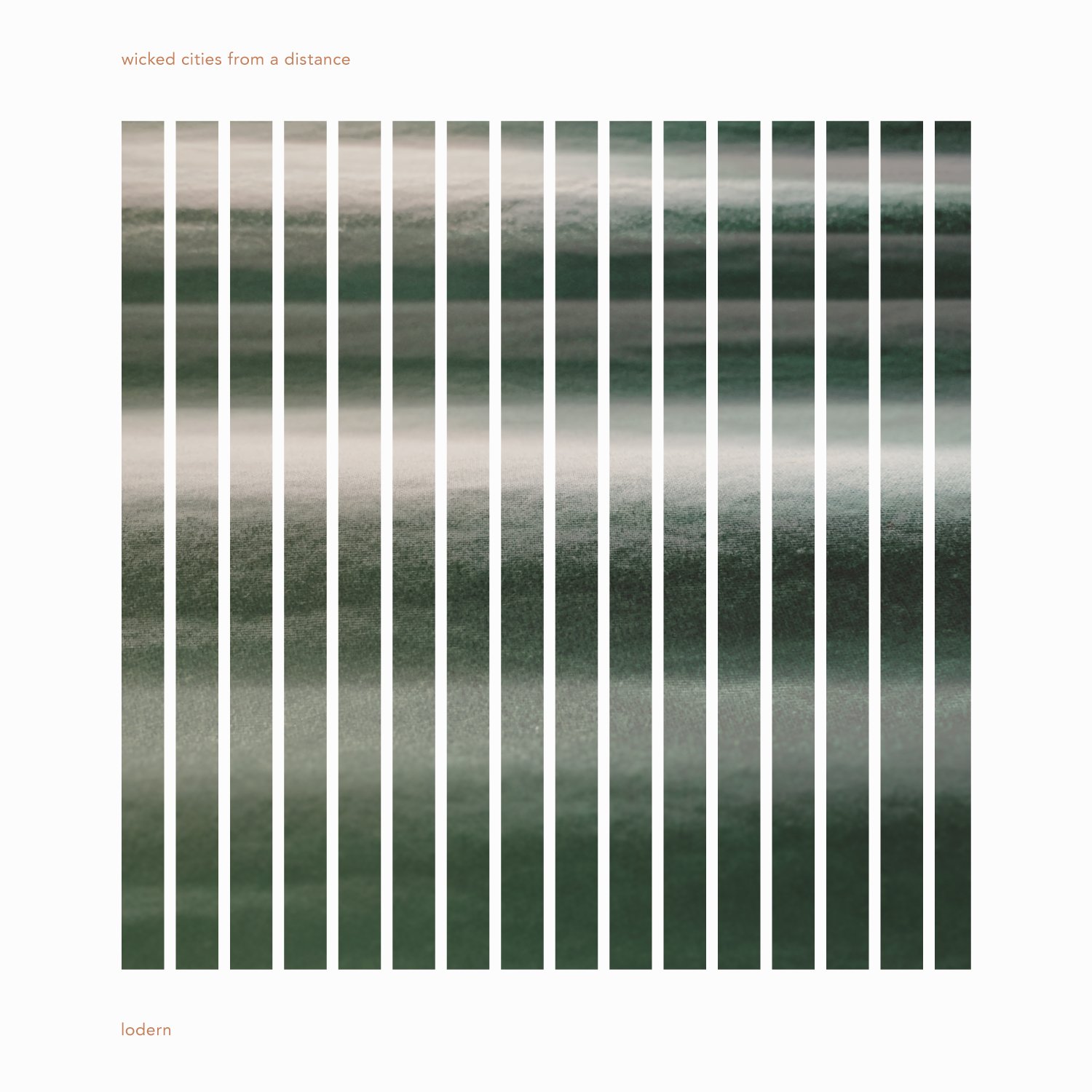
Lodern cover art, by Wicked Cities From A Distance
The old kicks the bucket. The new catapaults itself into being. An everlasting cycle. Rinse and repeat. Ever changing and always occuring. Life, death, restated.
The gap between death and rebirth is known as the liminal space. This space occupies a poetic place in storytelling. Imagine a limbo place where twilight, awkwardness, and risk form the lay of the land. A bardo that underscores the contrast between the old and the new. An initiation that compels a clear look at the past as well as energizing the will to jump bravely into the future.
Everyone enters the liminal space. It happens over and over again. All of us come back renewed afterwords. It's a rite of purification. Problems consumed by that inferno never return with as much power as they once had. We move on, relieved yet vaugely aware that this dance will happen many, many more times in our lives.
Lodern displays an astonishing magnitude of variety, contrast, rhythm, and thickness without modifying the fundamental harmony. At moments, there dwells a deeply-embedded chaos. One sound burning itself up only to get replaced with something new. A death of the old and the sprouting of the new.
Like the liminal space, Lodern holds contrast. A narrow mono signal contrasting with a wide stereo relief. Long-held drones contrasting with a spirited loop run through a distortion pedal. A triangle wave fundamental contrasting with a pitch-shifted Fender Rhodes. Time-based storytelling that plays with the richness of timbre.
Lodern invites a listener to stir the pot. It encourages full participation, staring with a clear consciousness at the coming transformation in this world, eyes-wide-the-fuck-open.
Inspired by the relentless change in the modern era, Lodern invites you to suspend time, enter the liminal space, and exit a little wiser.
Fractal Magic is the fourth track off of Ambient 2022, Vol. 2.
Ambient 2022 Vol.2: One hour listening experience for work, mental engagement, and concentration. Perfect for study, cooking dinner, drawing, light vice expression, and interesting love-making.
Special thanks: Kirt Bozeman, David Hobizal.
Teleporter is the first track off of Ambient 2022, Vol. 2.
Ambient 2022 Vol.2: One hour listening experience for work, mental engagement, and concentration. Perfect for study, cooking dinner, drawing, light vice expression, and interesting love-making.
Special thanks: Kirt Bozeman, David Hobizal.
Ambient 2022 Vol.2: One hour listening experience for work, mental engagement, and concentration. Perfect for study, cooking dinner, drawing, light vice expression, and interesting love-making.
Special thanks: Kirt Bozeman, David Hobizal.