
Stravinsky, The Rite of Spring, Rehearsal Numbers 28 & 29
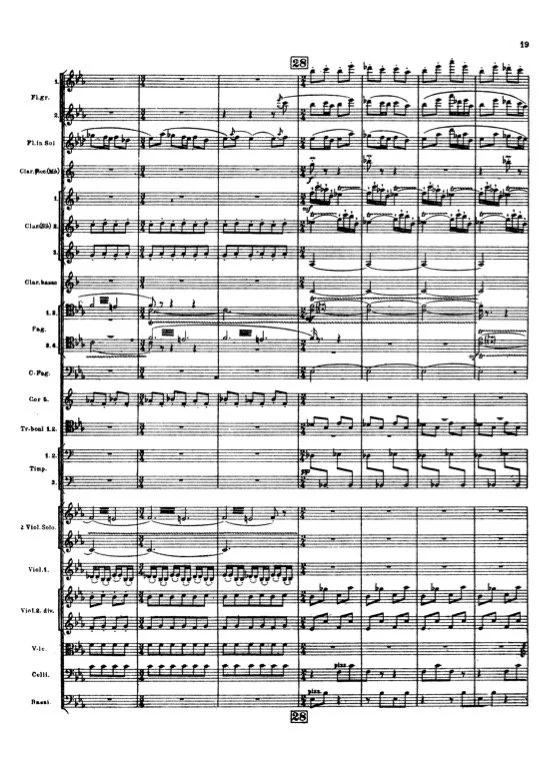
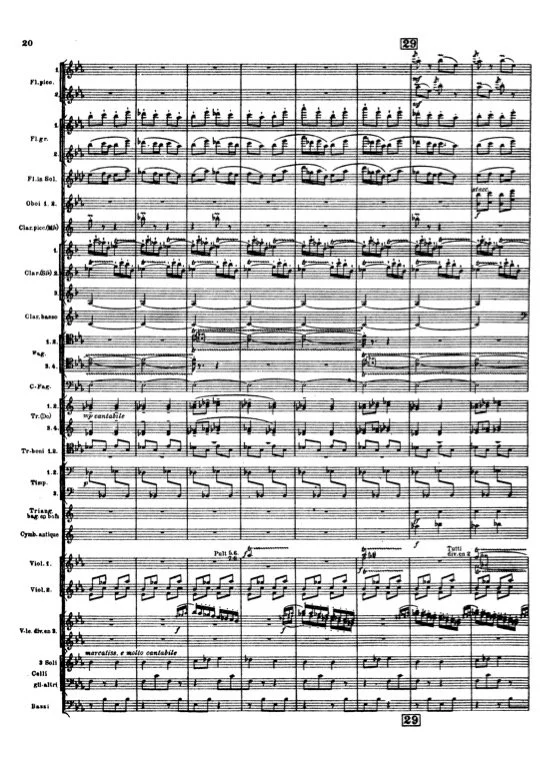
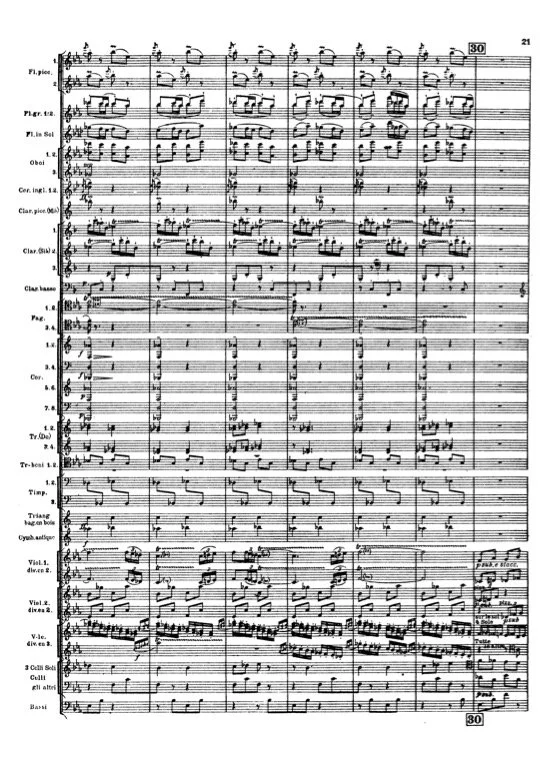
Rehearsal numbers 28 and 29
Interesting polymeter, blend of differentiated motion, in both the cellos and contrabass. Same motivic thing seen earlier is now in the Timpani (as well as many other places).
Something to keep in mind: you do not need to simply add a single note to a single instrument to get a sustained sound. What this section proves to me is that I can add a great deal of pulse and movement if I dovetailed the woodwinds, wrote repeated figures in the strings, and generally embraced motion as sustaining sound as well as blend of differentiated motion
Clarinet (B) has the same repeated figure, as does the flute, alto flute, piccolos, and oboes. Each of them have repeated ostinato melodies that dovetail to save breath. This is much more interesting than a single whole note in a measure, and it achieves a great deal more pulse
The bassoon is still doing the trail, dovetailed!
I love the trumpets here. They sound diatonically planed, but that's just not the case.
GbM7 to Ab7 to a Bb7 to a C half diminished 7
GbM7 isn't part of melodic minor at that point of the scale, but from Ab7 to a Bb7 to a C half diminished 7, they match the IV, V, and vi of melodic minor perfectly.
I have a strong hunch that Stravinsky trusted his ears way more than the music theory. In other words, I think he changed the first chord to match what appealed to him rather than just forcing that chord to be a M7#5 as it would be in melodic minor