
Stravinsky, The Rite of Spring, Rehearsal Numbers 23-27
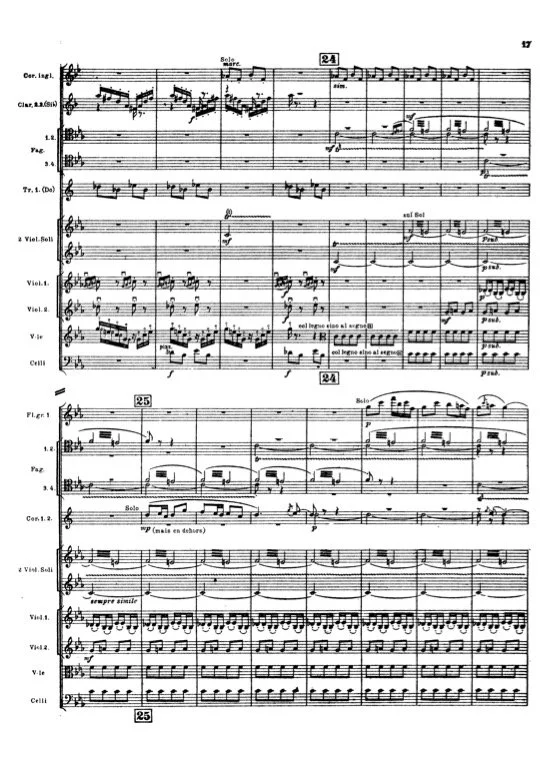
Rehearsal number 23
Clarinet and Viola doubled in E triad shape versus a trumpet in C with the violin one and violin two sections doing roughly B minor add11 ostinato figure.
Seems very much like a polytonality moment
I love the first violin here. The grace notes are lovely and determined sounding. The down bowing makes it interesting and intense
Rehearsal numbers 24 and 25
The bed he creates here highly dovetails the bassoons, but the violins are able to play the same figure throughout the entire section.
Bassoons hit measured fingered tremolo between F4 and E4 while bassoon two has an unmeasured trill at C4 , possibly to D4,. Both of these have a pleasant tone.
Violin solos doing a full doubling of the bassoons, but no dovetail is needed. Pleasant and mellow territories as far as tone.
There's a weird polytonality action happening in the strings and bassoon dovetails. When broken down, my guess would be an A minor chord and a G minor chord
French horn and flute melodies have a gorgeous C mixolydian melody, I'm thinking
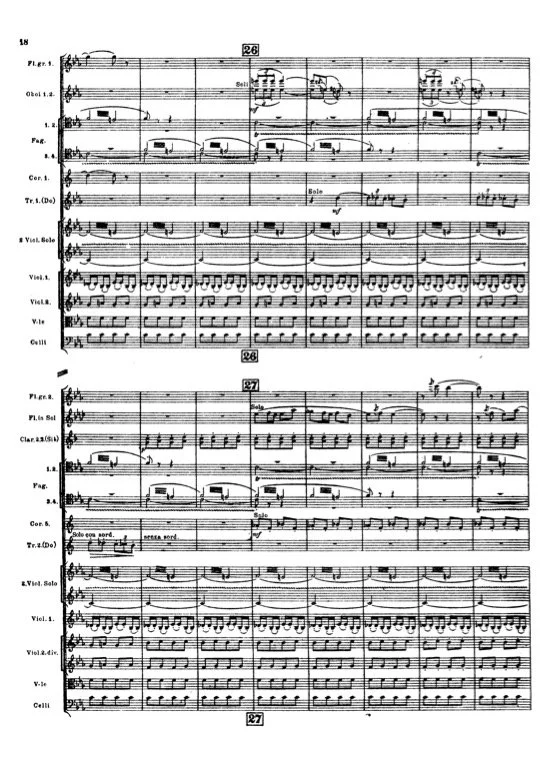
Rehearsal number 26
More of a transition part I guess, but the French horns moving downwards as well as the oboes moving downwards makes this part feel less consequential than the parts before and after
The same bird-like tone in the oboes as you could get in the flutes in rehearsal number 21. Gotta remember the downward grace notes. Parrots principle at work? Vast majority of composers write grace notes starting from a lower note. Why not the higher?
The same musical bed is continued. I always worry about staying too long on a loop, but this bed is so interesting that perhaps this can be amended. If I have a really super interesting loop, and the things that are happening around it are really interesting as well, I could probably stay on it for longer. Otherwise, loop lock…
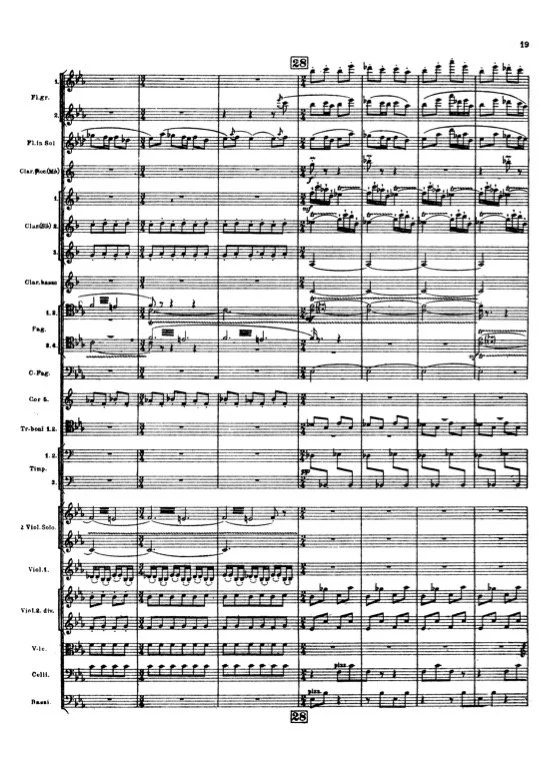
Rehearsal number 27
I think this part is far more put together with its polytonality. I tend to hear the melodies a whole lot more than I do the bed that has been established. Perhaps this is another reason why the bed works so well for so long. There is so much happening around it.
Alto flute sounds gorgeous here. It's almost haunting, far more glowing and restrained comparatively to the flute, which comes in on the fourth measure after the change to rehearsal number 27, and it makes it sound like it's peeking out of the mix because it's in its bright territory
French horn joining polytonality established in rehearsal number 24 and 25. This is a great way to make any loop more intense, simply just adding more stuff onto it