
Stravinsky, The Rite of Spring, Rehearsal Number 56
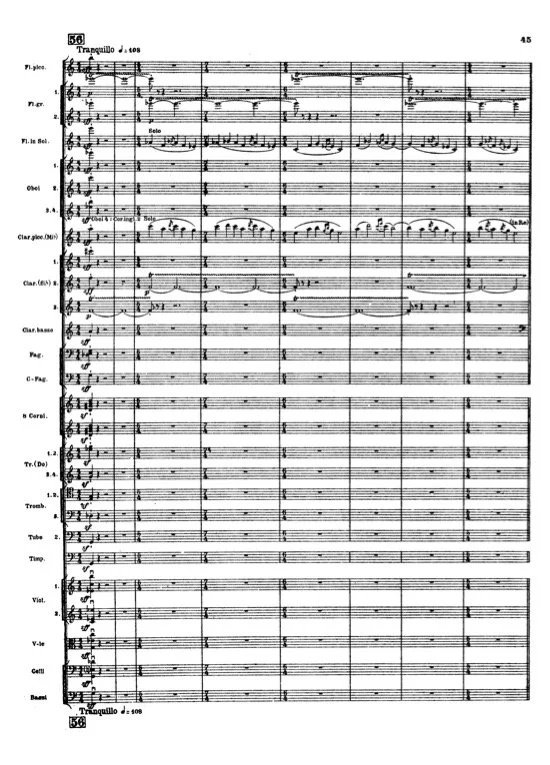
Rehearsal number 56
I think this section illuminates two or three compositional themes that I’ve seen in The Rite of Spring
Dovetailed trills in the woodwinds. The vibe itself changes depending upon which instrument does the trills. In this section, the flute trills have a butterfly effect to them. I wonder how to describe dovetailed trills and how they sound like when other woodwinds are doing them.
A simple flickering melody which naturally end without conforming to an existing time signature. In this section, the melody is widely spaced between a totally brilliant sounding E flat clarinet and a super warm alto flute. It’s very rare you see a clarinet this high and a flute this low at the same time and so exposed, but it works in a really disturbing and unsettling way. More to the point: The melody dictates the time signatures, which tells me that if a melody feels like it wants to go further in a more natural manner, it’s best to change the time signature and extend it (and vice versa). Do not force a melody to conform unnaturally to the prevailing time signature if you can help it.