
Stravinsky, The Rite of Spring, Rehearsal Numbers 13-15
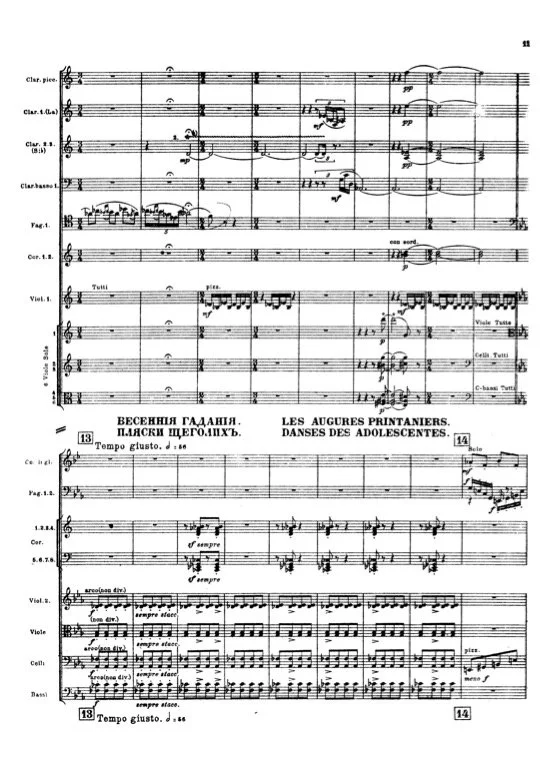
Rehearsal number 13
Arco non-divisi gives a double stop way more force in the strings
Viola's down bows naturally means we hear the higher note more
Most audible: Eb4 violin, Bb3 viola, Fb3 celli, Cb4 (written) contra bass
The actual chord is bonkers! Eb-7 add b9 #5 Eb7/Fb add b9 #5
On piano, this chord sounds crazy and messy, but with strings, it sounds perfect
The French horns add this girth to the emphasis… The French horns are squarely in their warm and mellow territory, and there are eight of them!
Rehearsal number 14
The cello is doing an alternation between an E chord and a C chord. Interestingly, both of these chords are related by a major third in their roots.
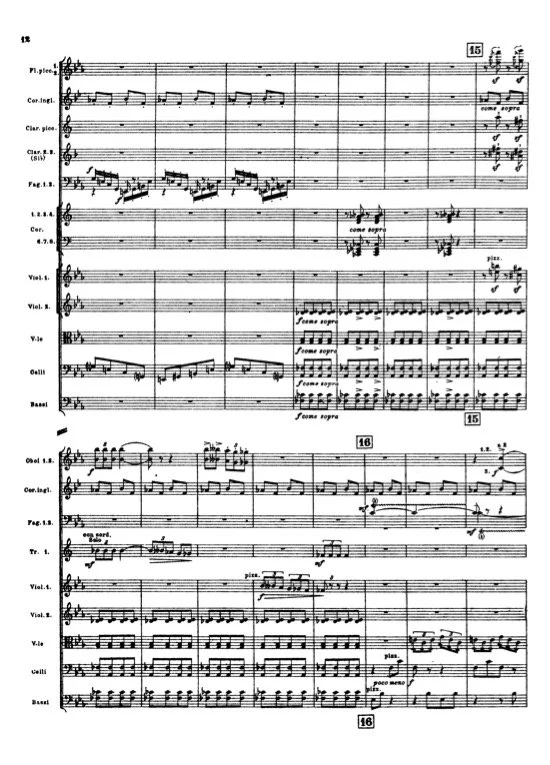
The bassoons are playing sixteenths in contrast to the cello eighth notes. Sounds perfect together... cello pizzicato and bassoons playing twice as fast in the same register.
The bassoon's first outline a C chord an E minor chord, which keeps to the movement of the major third between the roots of these chords. The oboe plays the theme established by the French horn in rehearsal number seven.
Rehearsal number 15
The triplet figure here gets passed around like a hot potato
Oboe to trumpet to oboe to violin I (pizzicato) to the trumpet
Beautifully written flute part here marks a division in the section by contrast. Feel free to use the flutes in this percussive, jet whistle way to make things really intense and ballsy, or as Ravel did when he would use percussion to mark a new section. Punctuation as McKay would state it.