Short, rhythmic ambient track with melodic fragments caught in a web of delay and reverb. Available on Bandcamp, exclusively:
Short, rhythmic ambient track with melodic fragments caught in a web of delay and reverb. Available on Bandcamp, exclusively:
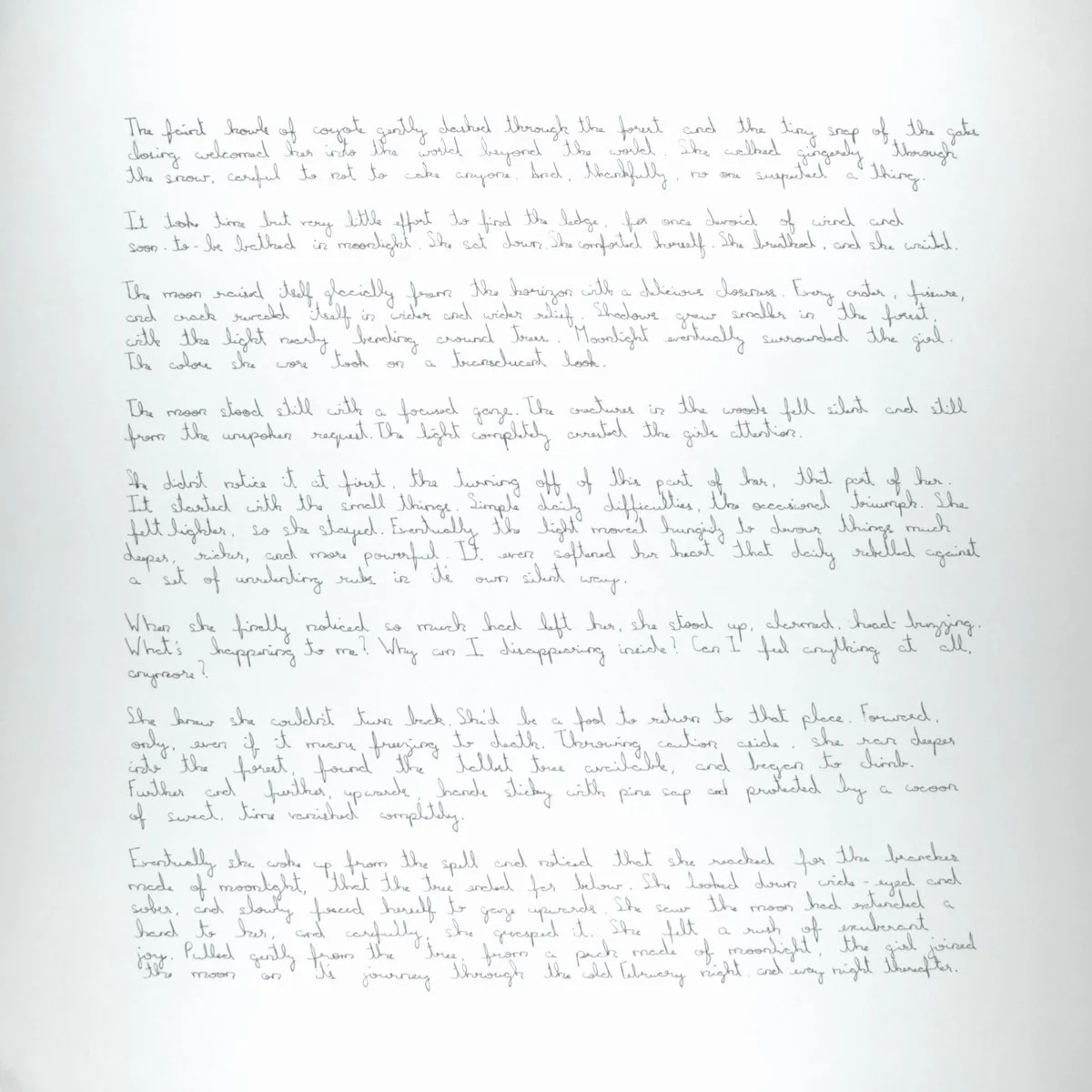
Lunae Lumin will be the latest ambient record to be released by Wicked Cities from a Distance (February 20th). Lunae Lumin is a concept album for the short story, A Perch Made of Moonlight.
This music was recorded and edited to a 432hz standard, which to some ears sounds way better than the perfectly tuned 440hz.
High resolution download of the story, the front and back covers, included with purchase:
Extremely influenced by Tim Hecker, Tomasz Bednarczyk, and Abul Mogard, the newest from Wicked Cities From A Distance focuses deeply upon a moving organ drone expressly synthesized through a Eurorack granular synthesis patch. It’s available for members of Fire, Fire, Red Star Down only.
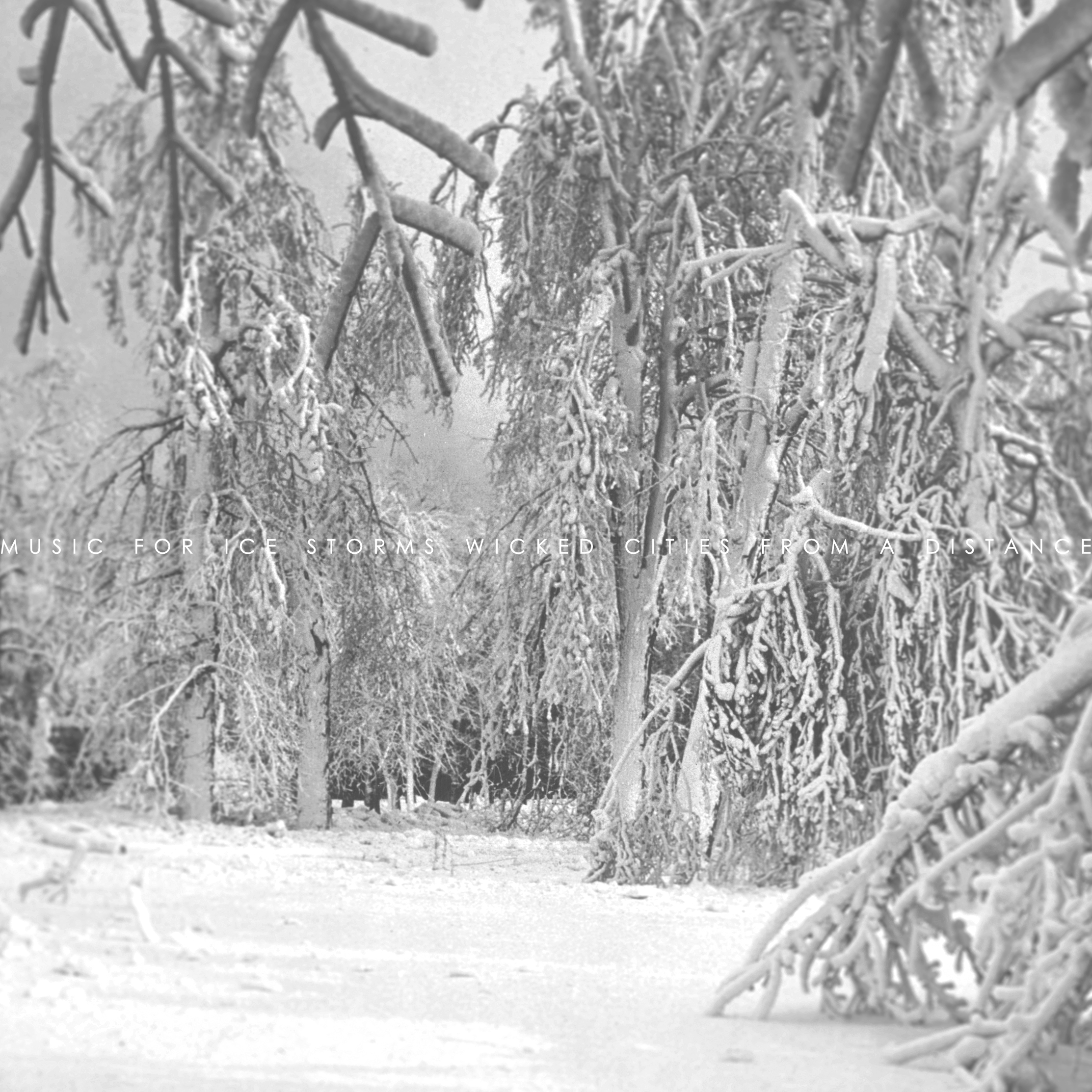
When the tree branches hold a great deal of weight with ice and snow, when the air seems almost too still for breathing, and when driving anywhere horrifies you, "Music For Ice Storms" is the remedy. This is music that serves you well if you'd just rather... not.
Though Wicked Cities From A Distance's prior two releases have explored the noisier side of ambient with both *Dual Portamento* and *Lodern*, "Music For Ice Storms" marks a return to the more relaxed, chill ambient roots. Always tinged with a slight edge of melancholy, this music is still perfect for a chill snow day.
Névé: A noun meaning granular snow on high mountains that has been compacted into dense, icy formations, related to "nival" conditions in snowy environments.
Gelid: An adjective meaning extremely cold, icy, or frosty, describing temperatures that go beyond "chilly" and penetrate to the bone.
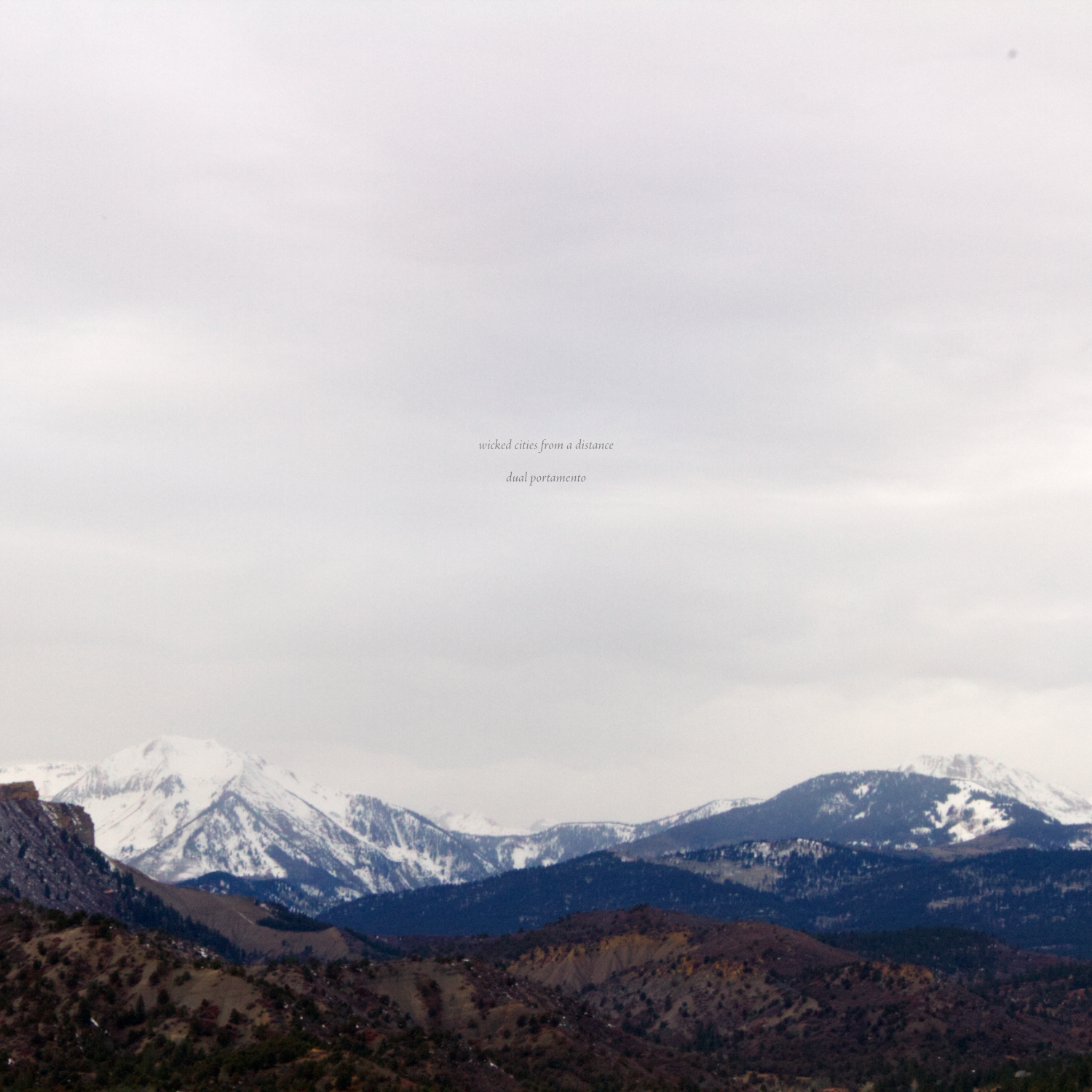
Greatly influenced by both Abul Mogard and Tim Hecker, Dual Portamento is immersive and uncompromising.
The song moves between a difficult calm (really), and a noisy intensity. It starts with ambient drones and soft tremolo textures, letting subtle noises and occasional melodic hints float around. These elements slowly build, creating gradual crescendos that rise from quiet moments to more forceful, cathartic peaks full of noise.
At it's heart, Dual Portamento evolves relentlessly into a bold, undiluted intensity.
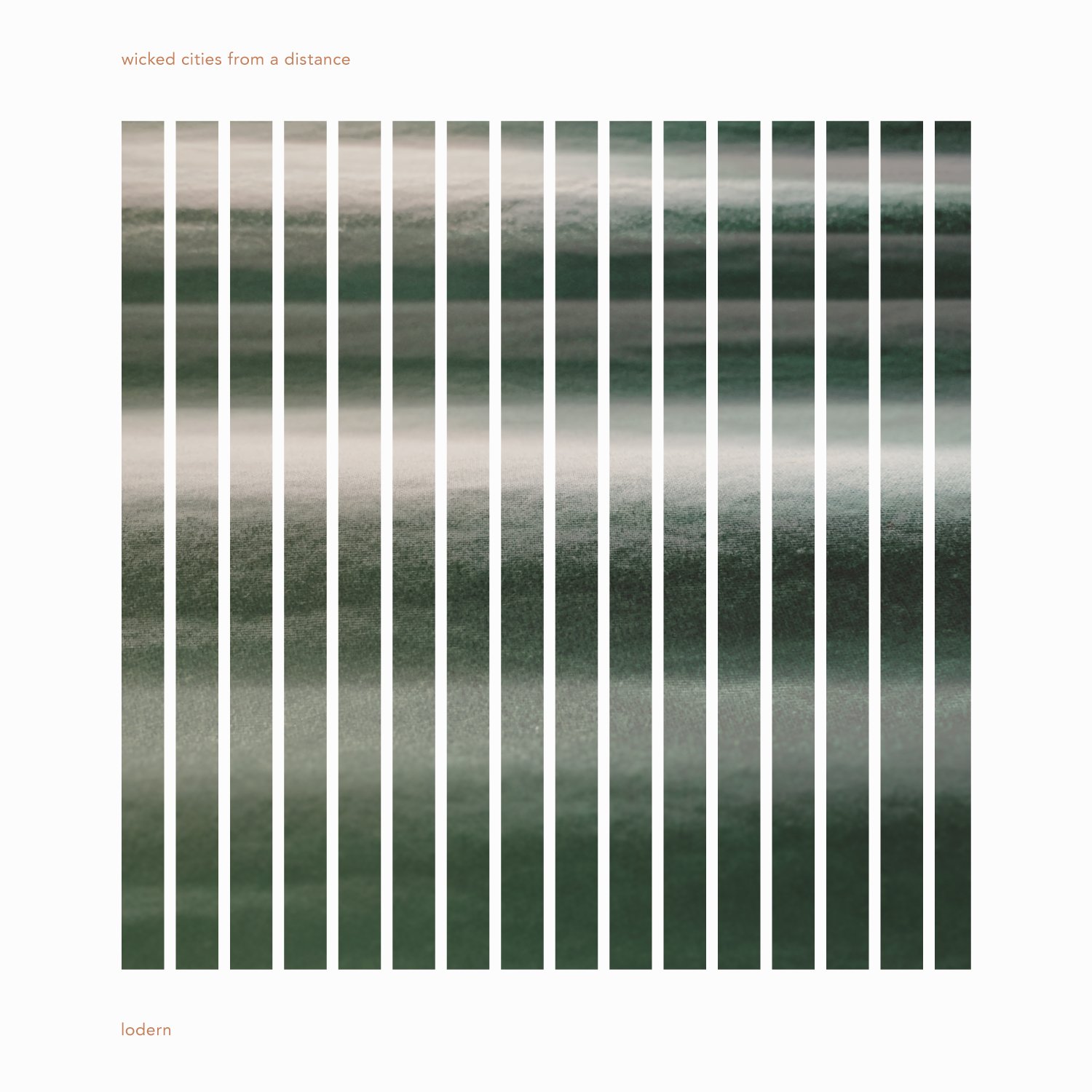
Through fifteen-plus minutes of saturated ambient textures, Wicked Cities From A Distance disseminates a comprehensive and dynamically intense soundscape on "Lodern", a sprawling single replete with sustained distortions and drones of celestial frequencies. WCFAD is the work of USA-based musician Dave Wirth, and this impressive single is released by the Austin, Texas-label Fire, Fire, Red Star Down! It creates a warm environment for the listener, but not an unchallenging one, lightly pressing at the seams of its semiliquid constitution with colourful flourishes.
Have you ever wondered how the most perfect music falls in your lap at just the right moment?
Kin Leonn, a UK-based ambient and electronic music producer, and his music smoothly nestled themselves into my headphones this summer. I needed it, too.
I learned of Leonn from his work on the film The Breaking Ice. The movie follows three adults in their early 20's, living in contemporary northern China. Each character forms a deeper friendship with the others, while simultaneously, all of them work through their past traumas. It's billed as a bittersweet romantic drama, and it delivers.
The Breaking Ice forced itself onto my list of movies that I will watch twice. It has a solidity to it that I appreciate from good, independent movies. Besides, all I needed was to hear just a few seconds of Kin Leonn's musical score to know that this movie would slay.
I've since come to admire Kin Leonn’s work on a much deeper level. He has a way of creating music that surprises me, pushes me, and haunts my edge every time. I believe that his music effortlessly incorporates a wide and surprising degree of contrasts.
There are several techniques he uses to create this contrast in his music. And, I might do a deep-dive on that in the future. For now, I want to go deeper on how Leonn’s deliberate use of contrast in his music influenced the process I had on Lodern, the most recent release from Wicked Cities From A Distance. I also want to talk a little shop about Eurorack synthesizers.
In the past, I created a lot of ambient pads and soundscapes, droning out for dozens of minutes. The trouble appears when ambient music dangerously veers towards sameness, and slaps the listener with boredom. Drones can feel a little dumb, repetitive, numbing, and perhaps overdone.
This was why I felt so relieved to hear Kin Leonn’s work. It forced me to realize how important it is to think about variety, to insert some conflict inside of a song. Nothing wrong with having a little fight in you.
Discovering Leonn’s work compelled a deeper awareness of composing music that surprises and delights. I definitely attempted that with Lodern.
Lodern has two notes: A root and a major third. It started as a simple drone piece. But this focus on contrast haunted me:
How on earth do I make a 15 minute long song interesting when it's just two notes, total?
To answer this, I need to nerd out about modular synthesizers. Fans of Eurorack are gonna love this part.
The bulk of Lodern was created from two Eurorack modules, the Make Noise Morphagene and the Qu-Bit Nebulae. Both of these modules accept recorded audio and turn it into loops. Then, they can mangle those loops in so many wonderful ways. John Lennon would have flipped his wig had he had access to these two modules!
On the Morphagene, I had a piano loop running backwards. Using control voltage, I was able to change where the sound played inside of the loop (SLIDE on the Morphagene). Further, I CV’d (short for control voltage) the size of the loop (GENE SIZE), and I also CV’d the MORPH knob on the Morphagene. This formed a dynamic loop, one that changes, a lot.
The output of the Morphagene took flight after getting patched into a Hologram Microcosm with the MIX all the way up. I fiddled a lot with the Microcosm during the recording (TIME, ACTIVITY, and REPEATS). This part sounds pretty mellow just on it’s own:
Make Noise Morphagene
On the Nebulae, using a similar piano recording but played in mono, I found a single section of the loop that I liked and froze it by turning the SIZE knob all the way down while keeping the START knob static. From there, I used my fingers to manually adjust the DENSITY, BLEND, PITCH, and OVERLAP controls.
The output of the Nebulae took on a very intense sound after I violently shoved it into a distortion pedal by DOD called the Gunslinger (Shoutout to Jerry Daniels for the pedal). This noisy loop dominates the dead center of the stereo field throughout the piece. During the mixing stage, I paired it with an EastWest Spaces reverb, a pretty slick convolution reverb, just to give it a little more breath:
Qu-Bit Nebulae
These ideas were patched through to three separate tracks on my iD44 interface, and then captured in one take… One big, long, 15 minute take.
I needed something to anchor the droney loops, something I could stand on with some certainty. I plugged a triangle wave output from the Pittsburgh Modular SV-1b into the filter section of the same module. I then took the lowpass filter out to the mixer. In one take, I opened the filter to get more volume when the song needed it:
Pittsburgh Modular SV-1b
Finally, I loaded up an ensemble string patch from EastWest's Hollywood Strings 2. I voiced a simple chord and mercilessly programmed it to repeat endlessly. If you've worked with orchestral samples, you know that the "sustained" sounds make interesting drones. Why? Players gotta stop at some point! The post production audio engineers who work on these sample libraries are often tasked with looping the end and beginning of a patch to create a sustained sound:
As I mentioned before, I do love long stretches of sound. But, drones need contrast to whack the livin’ hell out of a listener. I had to find places where sound could jostle things out of the ordinary.
A very good friend of mine Eddy Hobizal, who’s music you ought to check out, graciously allowed me to borrow his Fender Rhodes. I was able to plug that bad boy straight into the Hologram Microcosm. Without too much fussing about, I could play all sorts of chords and the Microcosm would throw everything back to me in a nice, twinkling way. An exemplar contrast to the lower foundational harmony.
Finally, I added some nature sounds. Why the hell not? Ambient musicians love nature sounds. Classic. Like a duck to water. Ha!
The entire session looks like this in Ableton Live:
Lodern in Ableton Live 12
Overall, I tried to make the elements of Lodern subtly contradict the next. I wanted each solitary minute to sound a tiny bit different than the previous. Sometimes the keyboard sounds would drift casually into the background, or lift up in the higher registers, or tinker with different harmony. Sometimes, the stereo field would hinge from balanced to dangerously out-of-phase. Sometimes, the thickening agents would just wreak a fever pitch of intensity.
I didn’t know what direction this music could take when I first started working on it.
My August this year (2024) held a plenitude of change. For one, I bought a new car. Having AC felt incredible as I had been without for about 7 years. I could actually drive places without having to bathe in my own sweat. I kept on getting the nudge to write and I began doing it. I decided to get new photos taken for my sites. And, Autumn felt closer than ever.
And once that change started happening, it manifested itself into Lodern. I ended up composing in that in-between place where I hadn't yet changed into something new.
I knew I had to pivot from old Dave to new Dave, as it happens from time-to-time. Lodern is music of that transformation, but specifically the space in-between, that liminal space, where we haven't yet figured out what's going on. Where we haven’t really finished the metamorphosis. That space has intensity. A good friend of mine said it's like taking a Polaroid and having to wait to see the picture clearly, later.
All I gotta say now? My-oh-my, thank god it's fall in Austin. That's a polaroid I've definitely been pining for.
Lodern cover art, by Wicked Cities From A Distance
The old kicks the bucket. The new catapaults itself into being. An everlasting cycle. Rinse and repeat. Ever changing and always occuring. Life, death, restated.
The gap between death and rebirth is known as the liminal space. This space occupies a poetic place in storytelling. Imagine a limbo place where twilight, awkwardness, and risk form the lay of the land. A bardo that underscores the contrast between the old and the new. An initiation that compels a clear look at the past as well as energizing the will to jump bravely into the future.
Everyone enters the liminal space. It happens over and over again. All of us come back renewed afterwords. It's a rite of purification. Problems consumed by that inferno never return with as much power as they once had. We move on, relieved yet vaugely aware that this dance will happen many, many more times in our lives.
Lodern displays an astonishing magnitude of variety, contrast, rhythm, and thickness without modifying the fundamental harmony. At moments, there dwells a deeply-embedded chaos. One sound burning itself up only to get replaced with something new. A death of the old and the sprouting of the new.
Like the liminal space, Lodern holds contrast. A narrow mono signal contrasting with a wide stereo relief. Long-held drones contrasting with a spirited loop run through a distortion pedal. A triangle wave fundamental contrasting with a pitch-shifted Fender Rhodes. Time-based storytelling that plays with the richness of timbre.
Lodern invites a listener to stir the pot. It encourages full participation, staring with a clear consciousness at the coming transformation in this world, eyes-wide-the-fuck-open.
Inspired by the relentless change in the modern era, Lodern invites you to suspend time, enter the liminal space, and exit a little wiser.
Fractal Magic is the fourth track off of Ambient 2022, Vol. 2.
Ambient 2022 Vol.2: One hour listening experience for work, mental engagement, and concentration. Perfect for study, cooking dinner, drawing, light vice expression, and interesting love-making.
Special thanks: Kirt Bozeman, David Hobizal.
Teleporter is the first track off of Ambient 2022, Vol. 2.
Ambient 2022 Vol.2: One hour listening experience for work, mental engagement, and concentration. Perfect for study, cooking dinner, drawing, light vice expression, and interesting love-making.
Special thanks: Kirt Bozeman, David Hobizal.
Ambient 2022 Vol.2: One hour listening experience for work, mental engagement, and concentration. Perfect for study, cooking dinner, drawing, light vice expression, and interesting love-making.
Special thanks: Kirt Bozeman, David Hobizal.
Stereotactic is the third track off of Ambient 2022, Vol. 1.
Ambient 2022 Vol.1: One hour listening experience for rest, relaxation, and rejuvenation. Perfect for reading, watering plants, small repetitive tasks that need to be finished only by you, and psychedelica.
Special thanks: Kirt Bozeman, David Hobizal.
Memories of Rain is the first track off of Ambient 2022, Vol. 1.
Ambient 2022 Vol.1: One hour listening experience for rest, relaxation, and rejuvenation. Perfect for reading, watering plants, small repetitive tasks that need to be finished only by you, and psychedelica.
Special thanks: Kirt Bozeman, David Hobizal.
Ambient 2022 Vol.1: One hour listening experience for rest, relaxation, and rejuvenation. Perfect for reading, watering plants, small repetitive tasks that need to be finished only by you, and psychedelica.
Special thanks: Kirt Bozeman, David Hobizal.