
Reading Notes
7-9 Minute Read | Laptop or Tablet Recommended
Topics and Themes
Perception of time in film; The ways in which music affects how we experience time; Enhancing the emotional impact of a story.
The Thrill of Speed
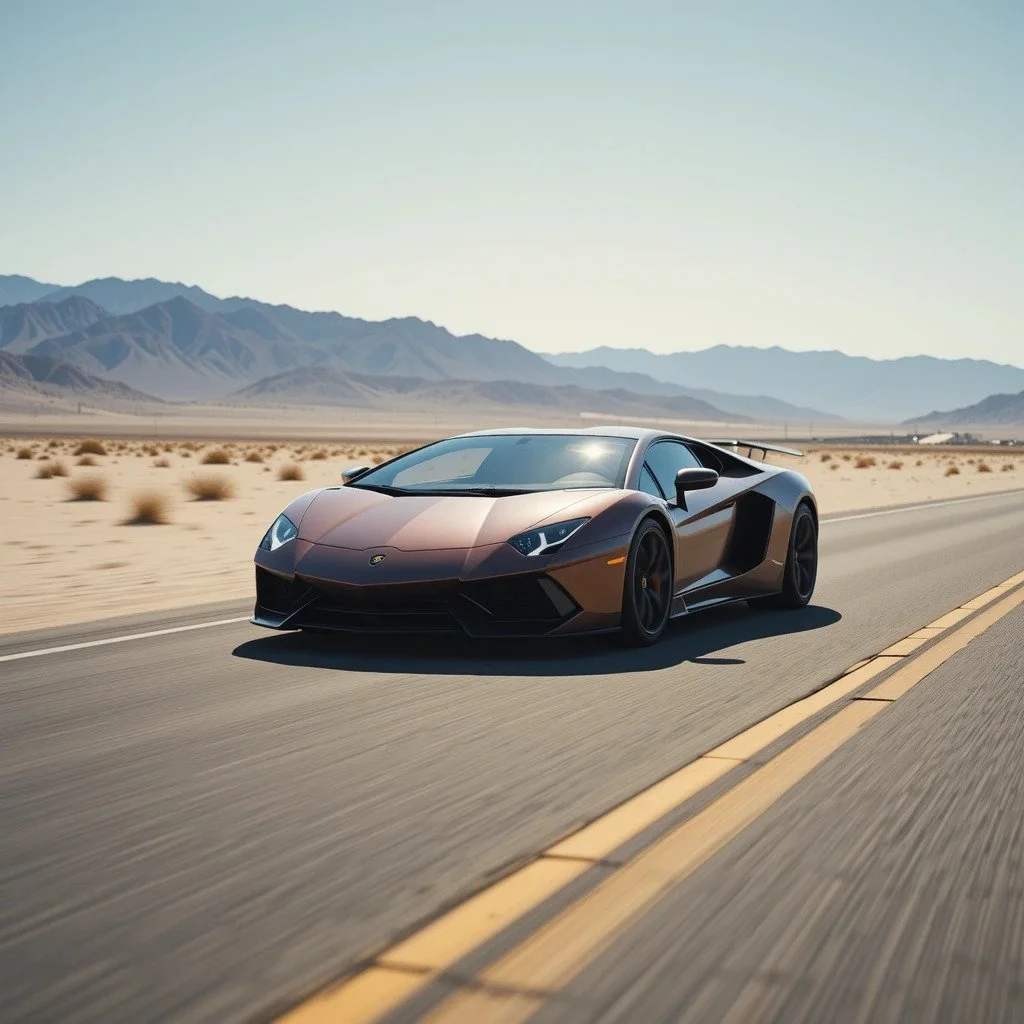
Imagine walking up to a stunning Lamborghini. The driver of the car steps out, extends a hand for a greeting, and invites you to sit in the front passenger seat, holding the door open for you. You slide into the bucket seat, gaze at the sleek dashboard, and breathe in the rich aroma of the car.
The driver slides in, coolly inserts the key into the ignition, reaches into the back seat, and grabs two helmets. With a playful toss, the driver gives one to you: "You're going to need this for safety, just in case. But overall, I've got you covered. You're in good hands." You slip on the helmet, and the driver inspects your safety harness. With a huge Cheshire grin, the driver asks, "Are you ready?" You flash a thumbs up. “Okay then!”
The driver slams down on the accelerator, and the force of inertia pins you back into your seat. At first, you can’t help but feel utterly astonished by the speed. The car launches forward almost too quickly. The engine roars with an intensity unlike anything else you've ever heard or felt. Details whirl into a haze. The twists and turns, with the rubber squealing on the road, create a loud sound that completely arrests your attention. You don't notice your hands white-knuckling it, grabbing onto whatever handles you can find. Mountains zip by, and the dust trailing behind the car swirls like a massive storm.
You can’t help but love every second of it. And before you know it, the ride ends. You will never forget it.
Now, let’s try a different thought exercise. Let’s take a moment to explore nature.
A Journey Through Nature
Imagine approaching a trailhead that leads into a mountain range. You have your backpack, your food, and everything else you need for a week-long expedition. You’re ready to embrace the trail. The guide steps forward and shakes your hand. It’s your job to follow, as the guide leads the way. The guide doesn’t talk much... Not unfriendly by any means, just not particularly chatty. The guide prefers to speak up when there’s something noteworthy to share, something to highlight, something that holds importance. Otherwise, the silence envelops you, allowing space for your personal journey.
The guide leads you on a trek through peaks, valleys, and streams. You witness nature at her finest… golden eagles soaring far off in the distance, and the clear clarity of light when you ascend to higher elevations. The guide pauses frequently, allowing you to absorb the beauty surrounding you. A sense of peace washes over you.
Yet, from time to time, you also walk close to urban areas. One or two nights, light from these cities invades the inner flaps of your tent. Air pollution sometimes irritates your lungs. You walk through tracts of land that corporations abandoned after exploiting the area. You feel a deeper sense of grief as you witness the scars left on this part of the world.
The guide knows these areas well and discusses them in turn. You hired this particular guide for a promise of a genuine experience in this mountain range. The guide didn’t sugarcoat anything for you. Everything unfolded as it was.
You can't help but appreciate every second of it. And before you know it, the trek ends. You will never forget it.
The Connection to Film Composition
If you’re still with me, perhaps you’re thinking, “What is he getting at?”
This:
In the first example, Junkie XL was the Lamborghini driver, and Mad Max: Fury Road was the movie. Junkie XL composed the score for Mad Max: Fury Road. This huge, action-packed thriller grabs your attention from the first minute and refuses to let go until the end.
In the second example, the mountain guide was Nicholas Britell, and the movie was Moonlight. Nicholas Britell composed the score for Moonlight. This slow-moving indie drama invites you to immerse yourself in a narrative and perspective in the most gentle way.
Overall, the two stories I presented in the beginning illustrate one of the most important concepts in film composing: An audience's perception of time.
The Spectrum of Time Perception
Both experiences, though vastly different, reveal how filmmakers manipulate time with music when you watch their films.
The Slow Tick of Indie Dramas
In some indie dramas, viewers tend to perceive time as slow. It feels as if each second ticks onwards. For example, The Zone of Interest, a haunting exploration of the life of a Nazi officer in charge of Auschwitz, provides a prime example. Through sound and a minimal score, the film compels everyone to experience the weight of every second in a painfully conscious way.
The Vanishing Act of Action Films
In contrast, viewers frequently do not notice time at all in the big action films. It's almost as if time vanishes deliberately. Consider Dune and Dune: Part Two, both of which Hans Zimmer composed the scores for. He is well known for creating big action scores that make two hours fly by.
These films exemplify how different types of film scores shape the audience's perception of time, with indie dramas inviting reflection and action films quickening heartbeats.
An audience's experience of time while watching a movie can be illustrated on a spectrum, like this:

A movie can occupy any position on this spectrum. It depends entirely on the director and their vision for the film. Very rarely do directors chase the extremes on either side.
The Composer's Role in Shaping Time
A significant aspect of my role as a film composer involves determining exactly what the director wants the music to feel like, including how they want the audience to perceive time.
As much as I might want to plaster a slow indie drama with wall-to-wall music, that would do a great disservice to the film. I love how slow indie dramas afford me the opportunity to take my time with the pacing of the music. There is less pressure to make time vanish. The studios that support these movies prioritize making a point; often, they want to shift towards exploring the human experience. Music that highlights this humanity enables the audience to think and feel in a deeper way.
Similarly, if I took a minimalist approach and shied away from scoring for large drum ensembles, orchestras, and big synthesizers for a major studio action thriller, I’d get fired in an instant. When big studios get behind films to the point of putting 20 million dollars or more into them, they want to see a return on their investment. They want to ensure that time dissolves for the viewer. They want to enthrall people who are paying for a movie that they can escape into. In this instance, scoring music that makes time disappear couldn't get more important.
I often ask pointed questions about how the director wants the audience to experience time. I like to ask this one: “How much do you wish to put the audience in a hypnotic state with music in your film?”
The answer to that question influences how busy or unhurried, how thick or thin, how industrious or organic the score needs to sound.
The Resonance of Time in Storytelling
Ultimately, whether racing through an action-packed story or meandering through a dramatic narrative, the way a filmmaker structures time shapes not only the film but also the audience’s emotional journey.
Most writers and directors I’ve met harbor a deep respect for the power of story. They want an audience to connect with the characters, to identify with the changes they have undergone. They want viewers to join them on that journey. In addition, they want film-lovers to invest in the characters and the journey they went through.
The way an audience perceives time will directly affect how well a story resonates. If the music manages time effectively, the audience will care even more.
In other words: Filmmakers who carefully attend to time, and how music influences it, will communicate their stories in a much more impactful way.